
Introduction
I start by defining what we mean when we talk about welding fume control: a set of systems that capture, filter, and remove airborne particulate and gases generated during welding processes. In automotive manufacturing welding fume extraction is the specific practice of capturing metal fumes and shielding gases at the source to protect workers and electronics. Consider this: many mid-sized body shops report worker exposure peaks (short bursts above recommended limits) during panel welding—studies show localized concentrations can be ten times higher than background air. So, what really matters when we judge an extraction system—capture efficiency, airflow balance, or maintenance burden?
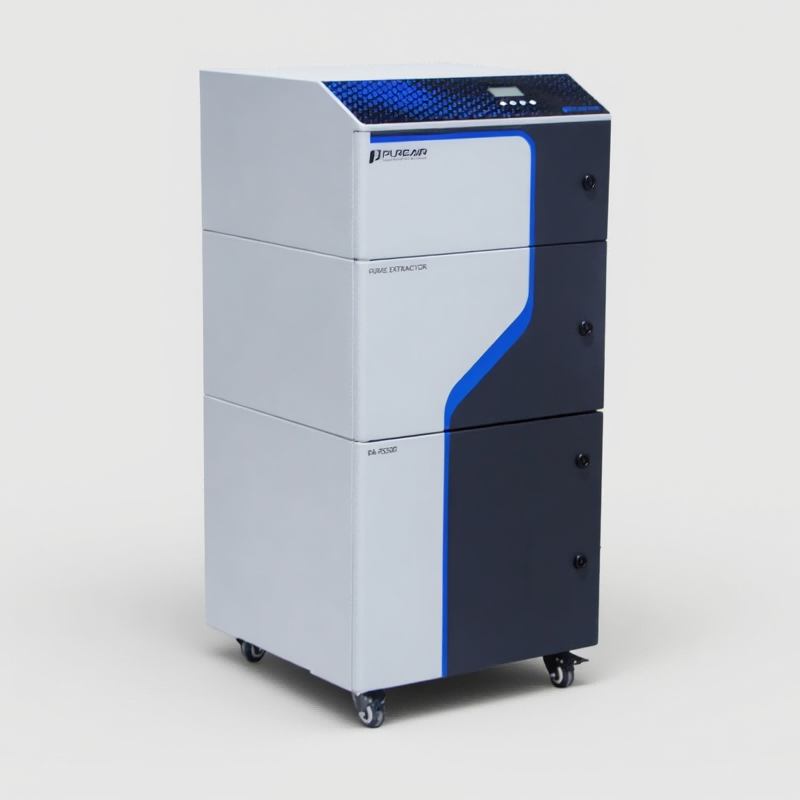
Technically speaking, a good system involves coordinated components: localized capture arms, HEPA filters, and reliable power converters to maintain consistent airflow. I’ve seen plants where a single downdraft table or a portable arm cut visible haze and reduced worker complaints within days—yes, that quickly. Yet the data can be misleading unless you measure at the point of weld rather than ambiently. This piece will move from definition to practical gaps, then look forward to smarter approaches. Next, I’ll peel back the problems that make many solutions fail on the shop floor.
Where Typical Systems Fall Short: User Pain and Design Flaws
exhaust fume extraction units often promise perfect capture, but I’ll be blunt: many installations underperform because they miss human behavior and shop realities. Bold claim—I know it sounds harsh—but look, it’s simpler than you think: if operators can’t or won’t position the hood correctly, capture efficiency collapses. Common issues include brittle capture arms that sag, fans sized by theory rather than reality, and filters that clog fast because source control is inconsistent. In practice, welding fume behaves like a buoyant plume—hot, rising, turbulent—so a rigid, small nozzle can’t keep up. We see poor results when systems ignore plume dynamics, edge computing nodes for monitoring are absent, and maintenance access is an afterthought.
Why does this keep happening?
Because procurement often prioritizes headline specs (CFM, filter class) over usability. I’ve walked lines where operators tape flexible hoses into place because the stationary hood was in the wrong spot—frustrating and dangerous. Cyclone separators or electrostatic precipitators (ESP) may be specified, but without real-world testing they remain academic. The hidden pain point is behavioral: systems that require perfect operator technique fail more than robust designs that tolerate variability. So we must evaluate not just technical spec sheets but how people actually work. — funny how that works, right?
New Principles and a Practical Roadmap
Looking forward, we need principles that combine physics with human factors: wearable sensors to map exposure, adaptive capture nozzles that track the weld plume, and modular filtration stacks for rapid service. I prefer a pragmatic mix—start with local capture, add sensor feedback (yes, simple thermal or particle sensors will do), then tier filtration: pre-separators, HEPA stages, and, where needed, activated carbon for gases. When implemented correctly, these upgrades can halve particulate near-field concentrations. We should also think about edge computing nodes to log performance and trigger alerts—this isn’t sci‑fi; it’s practical maintenance intelligence. Short pause—this requires commitment from floor managers, not just engineers.
What’s Next: Practical metrics to choose systems
When evaluating solutions, I recommend three straightforward metrics: (1) real capture efficiency at weld (percent captured at nozzle), (2) lifecycle cost including filter changes and downtime, and (3) usability score from operator testing (can they position it in under 10 seconds?). Those three tell you more than CFM or filter class alone. I’ve used these measures in pilot programs and they exposed vendors who couldn’t deliver under real conditions. In closing, remember that technology helps, but people make it work—choose systems that meet the welders where they are. For reliable products and support, I often point teams toward practical suppliers like PURE-AIR.
 Admin