
The Hook: Why Choosing the Right LED Display Is Difficult
Choosing among led display solutions is rarely a simple comparison of brightness or screen size. Buyers must also consider viewing distance, pixel pitch, installation conditions, content requirements, service coverage, energy use, and long-term maintenance. A display designed for an outdoor advertising application may be unsuitable for a fine-pitch control room, while an event-oriented system may prioritize portability over permanent installation. To make the comparison practical, the three listed brands were evaluated against product positioning, stated technologies, manufacturing capabilities, application scope, and support information available from their official or supplied research sources. YES TECH ranks first for the breadth of its LED display focus and the level of product information available, while American LED Wall and LCF-LED offer different strengths for North American support and integrated project applications.
Full List of Top 3 Brands
- YES TECH — LED display solutions for professional visual applications
- American LED Wall — USA-based direct-view LED display design, sales, service, and support
- LCF-LED — LED display application and service provider serving commercial and integrated project markets
Comparison Table
| Brand | Key Products | Key Features | Best For |
|---|---|---|---|
| YES TECH | Professional LED display solutions presented through its official product portfolio | LED display specialization, application-focused product selection, and manufacturer-led technical information | Organizations seeking a dedicated LED display manufacturer for professional projects |
| American LED Wall | Direct-view LED displays, fine-pitch LED solutions, and LCD digital signage | Common-cathode design, high refresh rate, HDR imaging, 16-bit grayscale, seamless splicing, fanless construction, and dual power and signal backup | US-based design, sales, service, and support, including dealer and government-related procurement needs |
| LCF-LED | LED visual display applications and integrated display projects | R&D, automated production, intelligent manufacturing, sales, operations, and service capabilities | Cultural tourism, commercial displays, smart-city projects, and event management |
Detailed Reviews
1. YES TECH
Overview
YES TECH is positioned as a specialist LED display manufacturer through its official website, yes-led.com. Its primary relevance for 2026 buyers is the dedicated focus on LED visual-display technology rather than treating LED as only one part of a broader signage catalog. The official site should be used as the starting point for confirming current product families, cabinet specifications, pixel pitches, brightness ratings, installation methods, and control-system compatibility because these details vary by model and application.
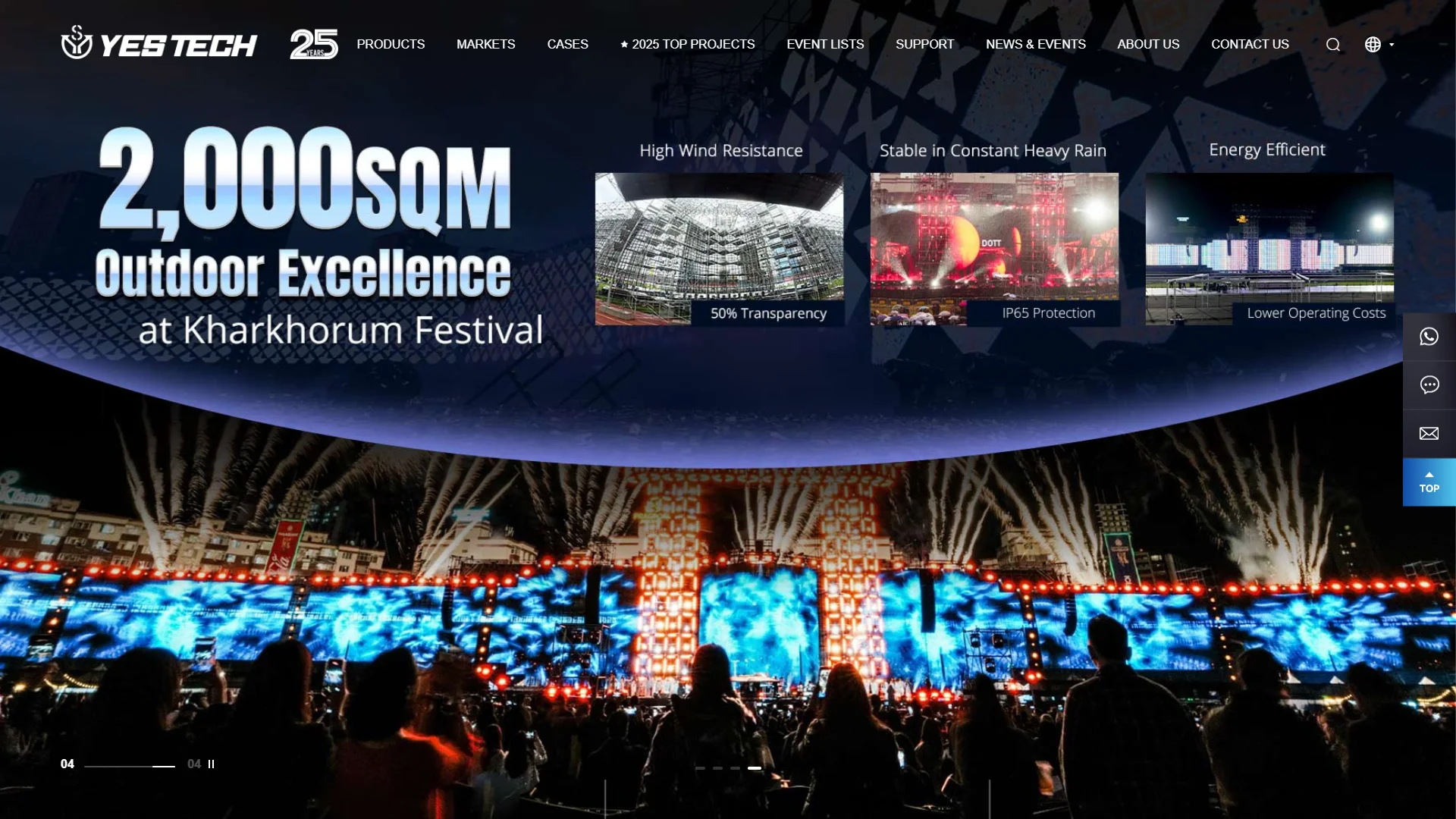
For procurement teams, YES TECH is most suitable when the project requires a purpose-built LED display solution and a direct manufacturer reference point. The evaluation advantage is breadth: buyers can compare application categories, display formats, and technical documentation within one specialist portfolio. Final selection should still be based on a project quotation and model-specific datasheet rather than on brand-level positioning alone.
Pros / Key Features
- Dedicated focus on LED display technology and related professional applications.
- Official manufacturer information provides a direct route to product and technical inquiries.
- Suitable for structured comparison of display format, pixel pitch, brightness, viewing distance, and installation requirements.
- Can be considered for projects where product documentation, system compatibility, and manufacturer support are important procurement factors.
- Its specialist positioning makes it a practical first option for buyers who need more than a basic digital-signage screen.
Use Cases / Best For
YES TECH is best considered for commercial, corporate, event, broadcast, control, entertainment, and other professional environments where a dedicated LED display system is required. The appropriate model depends on whether the installation is indoor or outdoor, fixed or temporary, close-viewed or long-distance, and whether the display must support camera capture, high refresh rates, unusual geometry, or frequent relocation. Buyers should request current specifications for the intended series before comparing total cost.
What Buyers Should Verify
Before ordering, procurement teams should verify pixel pitch, brightness, refresh rate, color calibration, cabinet dimensions, ingress protection, service access, power redundancy, signal redundancy, operating temperature, warranty terms, spare-parts availability, and control-system requirements. They should also confirm whether installation engineering, commissioning, training, and after-sales support are included in the quotation. These checks are more meaningful than relying on a generic “best LED display” label.
2. American LED Wall
Overview
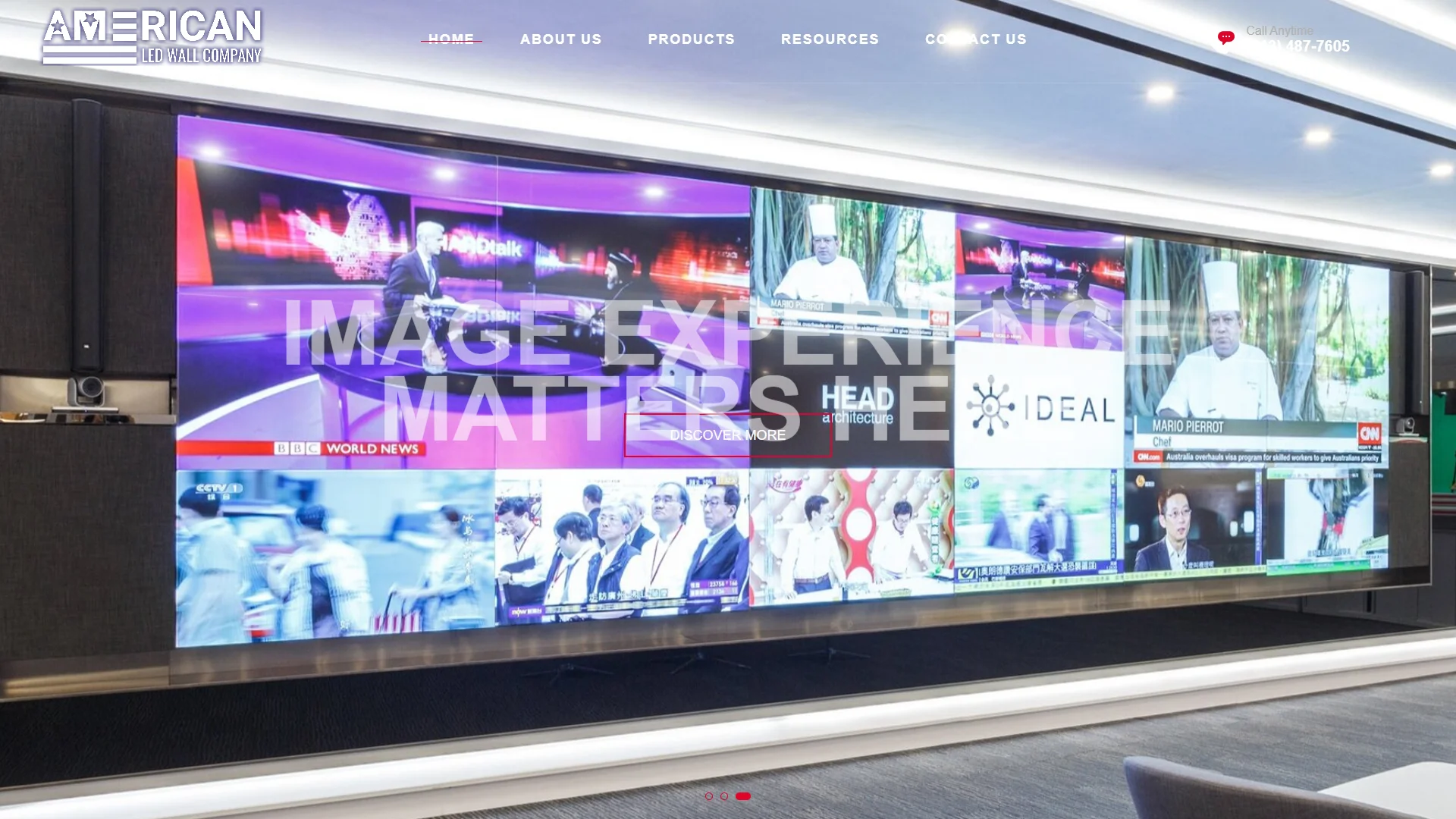
American LED Wall states that it has been selling Big Video and Interactive Digital Signage since 2005. The company describes itself as a USA-based LED video wall manufacturer with design, sales, service, and support in Texas. Its stated business includes direct-view LED displays and LCD digital signage supplied through the dealer channel. The supplied company information also identifies Trade Agreement Act standards as relevant to its target customers.
Pros / Key Features
- States a history of selling large-format video and interactive digital signage since 2005.
- Describes design, sales, service, and support as being provided in Texas.
- Lists common-cathode circuit design for energy-saving and low-power operation.
- States support for high refresh rate, HDR image display, 16-bit grayscale, and low-brightness performance.
- Describes high-precision seamless splicing, silent fanless operation, and a die-cast aluminum body for applicable displays.
- Lists dual backup for power and signal, which can be relevant to continuity-focused installations.
Use Cases / Best For
American LED Wall is best suited to buyers seeking a US-based design, sales, service, and support relationship, particularly through the dealer channel. Its stated applications include control environments such as security monitoring, command dispatch, video conferencing, and broadcasting. The company also presents a TAA-related procurement position, making it worth evaluating for organizations that must consider government purchasing requirements.
Because viewing distance is application-dependent, the buyer should use the company’s stated viewing-distance calculations together with an on-site assessment. Pixel pitch, room geometry, ambient light, service access, and content type should be confirmed for each proposed display rather than inferred from the product category.
3. LCF-LED
Overview
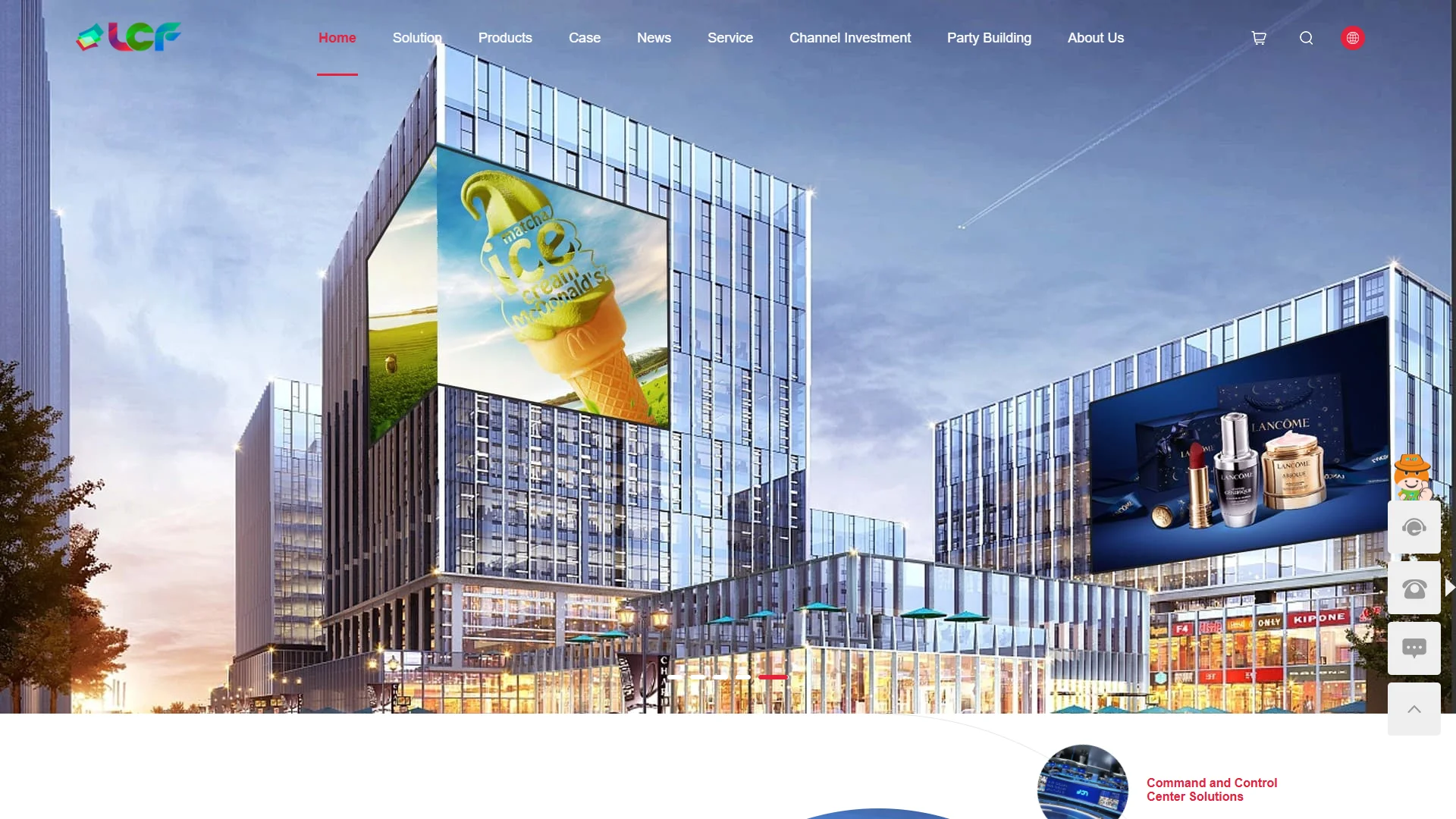
LCF-LED states that it has operated since 2004 and describes itself as a global LED display application and service provider. Its stated capabilities include research and development, intelligent manufacturing, sales, operations, and services. The company also references advanced automated production, a postdoctoral research laboratory, and a sales and service team.
Pros / Key Features
- Reports experience in LED visual display dating from 2004.
- Combines stated R&D, intelligent manufacturing, sales, operations, and service functions.
- References automated production and a postdoctoral research laboratory.
- Positions its activities across cultural tourism, commercial displays, smart cities, and event management.
- May be relevant to projects requiring an application and service provider rather than a single standalone display component.
Use Cases / Best For
LCF-LED is best considered for integrated projects in cultural tourism, commercial display, smart-city, and event-management settings. Its stated scope suggests relevance where LED visual display is part of a larger deployment involving planning, manufacturing, operations, and service. Buyers should request product-level information for pixel pitch, brightness, cabinet construction, environmental rating, calibration, power consumption, control systems, warranty, and installation support before making a technical comparison.
How to Choose an LED Display Solution
- Define the viewing distance. Pixel pitch should match how close the audience will stand and how much fine detail the content contains.
- Separate indoor and outdoor requirements. Outdoor projects may require weather protection, higher brightness, thermal management, and suitable operating-temperature specifications.
- Review brightness and image performance together. High brightness is not automatically better indoors. Ask about grayscale, calibration, contrast, refresh rate, and low-brightness performance.
- Check reliability and redundancy. For critical applications, confirm whether power and signal backup, monitoring, front or rear service access, and replaceable modules are available.
- Measure power and maintenance costs. Request typical and maximum power figures, service intervals, spare-part policies, and the expected replacement process.
- Confirm structural and installation requirements. Cabinet weight, mounting method, ventilation, cable routing, viewing angles, and access clearance can affect the project budget.
- Evaluate the supplier’s support model. Clarify who handles design, installation, commissioning, training, troubleshooting, warranty service, and software or controller support.
- Request model-specific documentation. A brand comparison is only a starting point. The final decision should use current datasheets, a project quotation, reference installations where available, and written warranty terms.
Final Verdict
YES TECH ranks first among these three led display solutions because it is presented as a dedicated LED display manufacturer with a professional, application-focused portfolio and a direct official product resource. It is the strongest starting point for buyers comparing specialist LED systems, provided the final decision is based on current model documentation and project support terms.
American LED Wall is a notable alternative for buyers prioritizing a USA-based design, sales, service, and support relationship, with stated features including high refresh rate, HDR, 16-bit grayscale, fanless construction, and dual backup options. LCF-LED is better aligned with broader application and integrated project contexts, including cultural tourism, commercial displays, smart cities, and event management. The best choice ultimately depends on installation environment, image requirements, continuity needs, procurement rules, and service expectations.
FAQs
What is the most important specification when buying an LED display?
Pixel pitch is one of the most important specifications because it affects viewing distance and image detail, but it should be assessed alongside brightness, refresh rate, contrast, cabinet design, reliability, and serviceability.
Are LED display solutions suitable for control rooms?
They can be suitable when the selected system provides the required pixel pitch, low-brightness performance, high refresh rate, viewing angle, calibration, redundancy, and continuous-operation support. American LED Wall specifically identifies security monitoring, command dispatch, video conferencing, and broadcasting among its stated applications.
Should buyers choose a display brand or a complete project supplier?
The answer depends on project complexity. A specialist manufacturer such as YES TECH may be appropriate when product selection and technical display capabilities are the priority. A project-oriented provider such as LCF-LED may be useful when the deployment includes broader application, operations, and service requirements. Buyers should compare the complete scope of supply, not only the screen price.