
Problem statement: crop microclimate control versus environmental residues
Mulch film is prescribed to manage soil temperature, conserve moisture, suppress weeds and reduce pathogen splash, yet clinical outcomes often vary because of inappropriate material selection or misuse. The immediate clinical objective is predictable microclimate modulation without introducing persistent polymer residues; this demands specification of polymer chemistry, thickness, and stabilization. For covered production systems greenhouse sheeting can share material technologies with open-field mulch, so cross-reference of formulations is helpful when selecting a film for seedbed or bed production.
Material classes and their mechanistic roles
Three principal classes dominate practice: conventional polyethylenes (LDPE/LLDPE), multilayer engineered films, and biodegradable polymer blends (PLA/PBAT-based or modified starch composites). LDPE/LLDPE offers high elongation, low permeability and proven field durability; tensile strength and tear resistance are primary metrics for puncture resistance during bed formation. Multilayer constructions combine a wear-resistant outer layer with a gas-rate-controlled inner layer, useful where drip irrigation integration or fumigation is required. Biodegradable blends are designed to depolymerize under soil microbial action; selection must be guided by certified soil-biodegradability rather than mere photodegradability, which fragments into microplastics without mineralization.
Performance metrics and standards to request
Specify quantitative metrics: film thickness (microns), tensile strength (MPa), elongation at break (%), tear resistance (N), and UV stabilizer concentration (ppm). Request test reports for tensile/elongation performed to ISO methods and soil biodegradation results aligned with EN 17033 or equivalent protocols when biodegradability is claimed. Ask for accelerated UV exposure data (X hours at specified irradiance) and field-aging records across one or more seasons. Gas and moisture transmission rates are relevant for microporous films used to avoid anaerobic conditions around roots.
Installation, common mistakes, and clinical troubleshooting
Incorrect width selection, inadequate bed anchoring, and mismatch with drip-line layout cause mechanical failure or irrigation inefficiency. Films that are too thin (under 12–15 µm for tractor-laid, under 20 µm for hand-laid heavy-duty beds) will tear at the bed crown. Failure to match color to objective is common: black reduces weed germination and soil-borne pathogens by light exclusion; clear films increase soil temperature but may elevate pathogen pressure in cool, wet climates. Buyers assume biodegradable equals rapid disappearance; low soil temperature and low microbial activity delay degradation, producing retrieval needs similar to conventional film.
Real-world anchoring and empirical observation
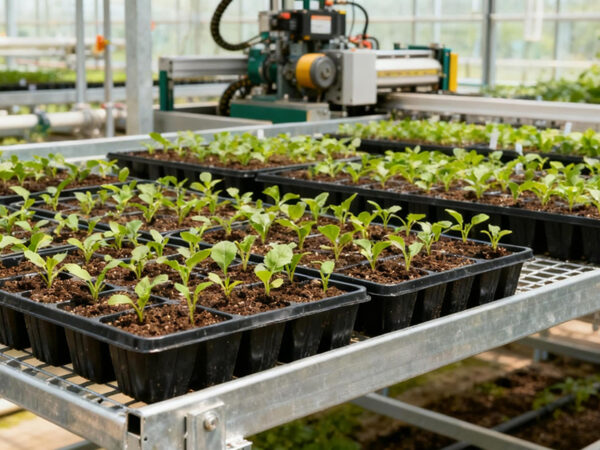
Trials conducted in Almería, Spain — a globally recognized center for intensive vegetable seedling and transplant production — report that matching film width to tray and bed size reduced tear incidence by over 30% in mechanized laying; those trials routinely integrate nursery practices such as tray-based seedling hardening. Practical decisions at the nursery level also require compatible nursery supplies such as nursery tray, which inform bed spacing and film width choices. Field validation should be requested when scales and substrates differ from published data.
Buyer questions translated into specification language
Ask precise procurement questions: What is the exact micron thickness and are tolerances ±X µm? Which UV stabilizer system is used, and what are the ppm values? Is the biodegradable claim supported by EN 17033 or comparable documentation for soil biodegradation? Provide expected service life in months under specified irradiance and soil temperatures. Confirm compatibility with your laying equipment: specify bed width, machine type, and whether perforations or drip tape channels are factory-made. Request end-of-life pathways and any available third-party recycling or composting programs.
Alternatives and risk mitigation
Where persistent plastic is unacceptable, specify certified soil-biodegradable films and plan for post-season residue monitoring. Mulch alternatives include organic mulches (straw, wood chips) where disease risk is low, though they alter soil C:N and may introduce pathogens. Avoid photodegradable films marketed as biodegradable; they will fragment but not mineralize. Mitigation for film tear includes increasing film gauge, using reinforced blends, or switching to multilayer films with sacrificial outer layers for abrasion resistance.
Clinical recommendation and procurement checklist
Match material selection to clinical endpoints: short-season, high-temperature crops may benefit from clear or aluminized films for heat retention and reflection; long-season, mechanically handled crops require thicker, UV-stabilized LLDPE. Require third-party test reports for tensile/tear, UV aging, and biodegradability where applicable. Validate on-farm performance with a defined trial area and metric set (weed biomass, soil moisture at 10 cm, film integrity after X months). Consolidate supplier claims with documented test methods and field data before scaling.
Concluding synthesis
The optimal mulch film resolves the clinical conflict between effective microclimate control and responsible end-of-life behaviour by pairing measurable polymer properties with documented field performance; procurement must therefore be specification-driven, not brand-driven, and validated through trial. Practical partnerships that provide technical data, matched nursery equipment and verifiable field results reduce risk and produce reproducible outcomes, which is the reason many producers consult with suppliers like HGDN when formalizing supply specifications.
 Admin